
What This Test Measured
I'll be honest with you: when I built HomilyWriterAI, I knew it had to be different from throwing scripture passages into ChatGPT and hoping for the best. But words are one thing. Proof is another.
So I ran a real test. Same scripture readings. Same day. Two different approaches. I recorded everything with no cherry-picking, then compared the actual homilies for Catholic depth, research grounding, pastoral usefulness, and readiness for preaching.
The Experiment
I wanted the comparison to feel like a normal preaching preparation moment, not a laboratory trick. The tools were given the same readings for March 21, 2026: Jeremiah 11:18-20 and John 7:40-53.
ChatGPT Process
- Opened ChatGPT.
- Typed: "Write me a homily on the following passages."
- Copied the scripture readings from the USCCB website.
- Pasted them into ChatGPT and generated a homily.
HomilyWriterAI Process
- Selected Deep Research Mode in HomilyWriterAI.
- Loaded the correct daily readings automatically through the Catholic liturgical calendar.
- Reviewed research from Church Fathers, Catholic commentaries, and magisterial teaching.
- Approved an outline, generated a draft, requested edits as needed, and downloaded a polished PDF.
ChatGPT's Homily
ChatGPT produced a coherent and broadly Christian reflection. It was readable, spiritually sincere, and organized around truth, misunderstanding, and trusting God's justice.
The limitation is that the draft stayed general. It did not cite Catholic sources, name the liturgical season, engage Catholic tradition, or draw the homily toward the Eucharistic moment of the Mass.
Read the full ChatGPT homily
There's a thread that runs through today's readings—a tension between truth and misunderstanding, between innocence and accusation, between God's justice and human judgment.
In the passage from Jeremiah, the prophet finds himself the target of a plot. He says, "I was like a trusting lamb led to slaughter." Jeremiah had been speaking God's truth, yet those around him turned against him. He didn't see it coming. His trust was met with betrayal.
That image should feel familiar to us. It's not just prophetic—it's deeply human. We know what it's like to be misunderstood, misjudged, or even opposed when we're trying to do what is right. Like Jeremiah, we can find ourselves asking: Why does doing good sometimes lead to suffering?
The Psalm gives voice to that same experience. It's a cry for refuge: "O Lord my God, in you I take refuge." There's urgency here—almost desperation. The psalmist fears being torn apart like prey. And yet, in the midst of fear, there is trust: God sees, God judges justly, God defends the innocent.
This is the turning point. The readings don't deny the reality of injustice—they assume it. But they insist that injustice does not have the final word. God does.
Then we come to the Gospel, and the tension becomes even more visible. Jesus is dividing the crowd. Some say, "This is truly the Prophet." Others say, "This is the Christ." Still others dismiss Him because they think they know where He comes from.
What's striking is that the same person—Jesus—evokes completely different responses. The issue isn't just who He is; it's how people are willing—or unwilling—to see.
Some are open. They listen, they wonder, they begin to believe.
Others are closed. They rely on assumptions, partial knowledge, even prejudice: "Does the Christ come from Galilee?" They think they already understand, and so they miss what is right in front of them.
And then there are those in authority, who are more concerned with maintaining control than seeking truth. When the guards return empty-handed, saying, "Never before has anyone spoken like this man," the leaders don't pause to reflect. Instead, they double down. They reject not only Jesus, but anyone who dares to consider Him.
Only Nicodemus speaks up, cautiously, reminding them of fairness and due process. But his voice is quickly dismissed.
So where does this leave us?
It invites us to ask a difficult question: Which voice do we resemble?
Are we like Jeremiah—faithful, even when it costs us something?
Are we like the psalmist—bringing our fears honestly to God, trusting in His justice?
Are we like those in the crowd—open and searching, willing to let Jesus challenge our assumptions?
Or are we like those who reject too quickly, convinced we already know enough?
The Gospel reminds us that encountering Christ is rarely neutral. He provokes a response. And that response reveals something about our hearts.
It also reminds us that truth is not always recognized by the majority, nor endorsed by authority, nor obvious at first glance. Sometimes truth stands quietly, like Jeremiah, like Jesus—misunderstood, even opposed.
But here is the hope that ties everything together: God sees. God knows. God judges justly.
Jeremiah entrusts his cause to God. The psalmist takes refuge in Him. And Jesus, though rejected by many, continues His mission unwaveringly, trusting the Father.
We are invited to do the same.
When we are misunderstood, when we face opposition, when doing what is right feels costly—we are not alone. God is not indifferent. He is the just judge, the safe refuge, the one who ultimately vindicates truth.
So today, let us ask for the grace to remain open to Christ, even when He challenges us; to remain faithful, even when it is difficult; and to trust in God's justice, even when the world seems uncertain.
Because in the end, it is not the loudest voices or the strongest opposition that prevail—but the quiet, enduring truth of God.
HomilyWriterAI's Homily
HomilyWriterAI produced a draft with a clearly Catholic frame: Lent, Passiontide, patristic commentary, pastoral application for Mass-goers, and a Eucharistic conclusion.
The result was not just longer. It had a preaching architecture: a vivid opening image, a central spiritual diagnosis, authoritative Catholic sources, and a final movement toward the altar.
Sources Consulted
- Catechism of the Catholic Church, 2nd Edition (CCC 608)
- St. Augustine, Tractates on the Gospel of John (Tractate 33)
- St. John Chrysostom, Homilies on the Gospel of John (Homily 52)
- St. Jerome, Commentary on Jeremiah
- The Navarre Bible Commentary: St. John's Gospel
- Ignatius Catholic Study Bible: New Testament
Read the full HomilyWriterAI homily
Dear brothers and sisters in Christ. Imagine being sent out to do a simple, straightforward job. Picture security guards dispatched to make a routine, highly anticipated arrest. Now imagine those same guards returning completely mesmerized and empty-handed. They forgot their entire mission because they were utterly captivated by the voice of the very person they were supposed to apprehend.
This extraordinary scene is exactly what unfolds in our Gospel today. As the shadow of the Cross falls heavily over these final days of Lent, the liturgy shifts our focus. We see dark plots to silence the truth emerging in both of our readings. The men of Anathoth are actively plotting against the prophet Jeremiah in our first reading. The Sanhedrin is dispatching armed temple guards to arrest Jesus in our Gospel.
Yet, instead of putting Jesus in chains, the guards are completely disarmed by His words. Today, my friends, the contrast between those open-hearted temple guards and the closed-minded Pharisees challenges us deeply. It challenges us, especially as devout, frequent Mass-goers, to drop our spiritual defenses. It calls us to avoid the pride of familiarity and allow Christ's words to continually capture our hearts.
In the Gospel, the temple guards are hardened, practical security personnel. They are men accustomed to following strict orders from powerful authorities without question. Yet they return to the furious chief priests with nothing but a statement of absolute awe. They simply say, "Never before has anyone spoken like this man."
Saint Augustine taught beautifully on this deep irony in his Tractates on the Gospel of John. He observed the guards and noted, "They were sent to arrest him, and they return captured by him." The guards represent the simple, open hearts that God so deeply desires from each one of us. They did not have advanced theological degrees or elite religious status. What they possessed was a profound and beautiful openness to the living truth.
Dear friends, we live in a world that constantly tries to silence the voice of God. This is much like the dark plot against Jeremiah, who describes himself as a gentle lamb led to the slaughter. However, God's truth possesses its own captivating, undeniable power that no earthly plot can defeat. We must ask ourselves when we come to Mass, do we truly allow the Gospel to speak to us?
We need to pray for the grace to be exactly like those ordinary temple guards. We must be willing to let the sheer beauty and authority of Christ disarm our daily anxieties. We must allow His living word to pierce our meticulously made plans and soften our hardened hearts. We must be willing to drop the heavy armor we wear in the world when we enter these sacred doors.
In stark contrast to the guards, we see the tragic and bitter reaction of the Pharisees. They reject Jesus completely out of hand due to a blind geographical prejudice. They confidently and arrogantly declare that no prophet is to rise from Galilee.
Their intellectual arrogance completely blinds them to the Messiah standing right in front of them. It blinds them so thoroughly that they even forget their own Sacred Scriptures. They ignore the ancient prophecies of His birth in Bethlehem because their minds are already securely made up. They value their own opinions more than the evidence of God working before their very eyes.
Saint John Chrysostom pointed out the extreme malice and pride of the Pharisees in this crucial moment. He noted that when the guards express their awe, the Pharisees do not pause to ask, "What did he say?" Instead, their immediate reaction is to hurl insults at the guards and appeal to their own elite status. They proudly ask, "Have any of the authorities or the Pharisees believed in him?"
Pride, as Saint John Chrysostom warns us so clearly, is the absolute greatest enemy of faith. As weekday Mass attendees, we are the devout insiders of this parish family. We are much like the Pharisees who were the religious insiders of the Temple in Jerusalem. This devotion is a tremendous blessing, but it carries a hidden and dangerous spiritual trap.
Brothers and sisters, our deep familiarity with the prayers and the readings can sometimes make us rigid. If we are not careful, our holy routine can quietly breed a cynical spirit within us. We can easily fall into the trap of thinking we already know exactly what God is going to say. When we do this, we blind ourselves to His real, immediate, and surprising presence in our lives.
We risk becoming people who hear the words of Scripture but no longer truly listen to the voice of the Shepherd. Nicodemus tried to speak up with a small voice of reason and justice, but he was immediately shouted down. The Pharisees could not tolerate any challenge to their comfortable, settled way of thinking. We must guard our own hearts against this exact same spiritual stubbornness.
The Gospel presents us with two very distinct paths as we prepare to enter Passiontide and Holy Week. We can choose the intellectual pride of the Pharisees, which leads only to isolation and spiritual blindness. Or we can choose the humble openness of the temple guards, who allowed themselves to be captured by the Word of God.
Let us ask the Lord today to completely strip away any insider arrogance we might be harboring. May He mercifully remove any cynical familiarity that blocks His transforming grace from entering our souls. May we approach the Scriptures today not as a text we already know, but with a beginner's heart. Let us be ready, willing, and eager to be utterly astonished by the Lord.
In just a few moments, the very same Lord who captivated those temple guards will become present on this altar. The Word who spoke in the Temple now gives Himself to us entirely as the Bread of Life. Like the gentle lamb led to the slaughter, He willingly offers Himself to the Father for our salvation. Let us step forward to receive Him with our hearts wide open. Let us be entirely and joyfully captivated by His infinite love. Amen.
What Stood Out
Both homilies were decent. ChatGPT produced something that sounds thoughtful and could work in a broad Christian setting. But for Catholic preaching, the stronger tool is the one that helps a priest preach from within the Church's liturgy, doctrine, and pastoral imagination.
ChatGPT Homily
- Generic Christian language.
- No references to Church Fathers.
- No liturgical context for Lent or Holy Week.
- No citation of Catholic sources.
- Could be preached in many Christian settings.
HomilyWriterAI Homily
- Explicitly Catholic language and framework.
- Cites St. Augustine and St. John Chrysostom.
- Places the readings in Lenten liturgical context.
- Lists authoritative Catholic sources consulted.
- Connects the conclusion to the Eucharist.
The Research Difference
This is where the gap becomes obvious. ChatGPT generated its homily from a prompt and the pasted readings. It did not build the homily around Catholic source research, and it did not show the preacher where its theological claims came from.
HomilyWriterAI actively researched the readings in real time, consulting Church Fathers, Catholic commentaries, and magisterial teaching. That is why the draft could include specific sources and build a homily with theological weight.
If I wanted to do that research manually, it could take hours with tools like Verbum. HomilyWriterAI did the research stage in under three minutes, then kept me involved through outline review, draft generation, and targeted edits.
Watch the Full Comparison
Don't just take my word for it. I recorded the process for both tools so you can see exactly how each one works.
The Bottom Line
If you're a Catholic priest looking for a tool that understands your ministry, respects Catholic tradition, and helps you prepare better homilies without flattening your pastoral voice, HomilyWriterAI is the better fit.
ChatGPT is a brilliant general-purpose AI. But Catholic homily preparation requires more than a smooth draft. It needs the liturgical calendar, Catholic sources, theological guardrails, and a workflow that supports the preacher as co-creator.
Ready to experience the difference?
Create your free HomilyWriterAI account and see the research-guided workflow for yourself. Your first homily is free, with no credit card required.
Bonus: Premium AI Chatbots Included
With a HomilyWriterAI subscription, you also get access to ChatGPT, Claude, Gemini, and Grok for parish bulletins, correspondence, meeting notes, and other pastoral tasks.
That means HomilyWriterAI is not only a Catholic-specific homily assistant. It also brings general AI tools into one ministry-friendly subscription.
Frequently Asked Questions
Is ChatGPT good enough for Catholic homily writing?
ChatGPT can produce readable Christian reflections, but this test showed its limits for Catholic preaching: no Catholic source trail, no liturgical framing, no Church Fathers, and no Eucharistic movement.
What made HomilyWriterAI different?
HomilyWriterAI loaded the readings from the liturgical calendar, researched Catholic sources, proposed an outline, and produced a draft grounded in Catholic tradition.
Who wrote this comparison?
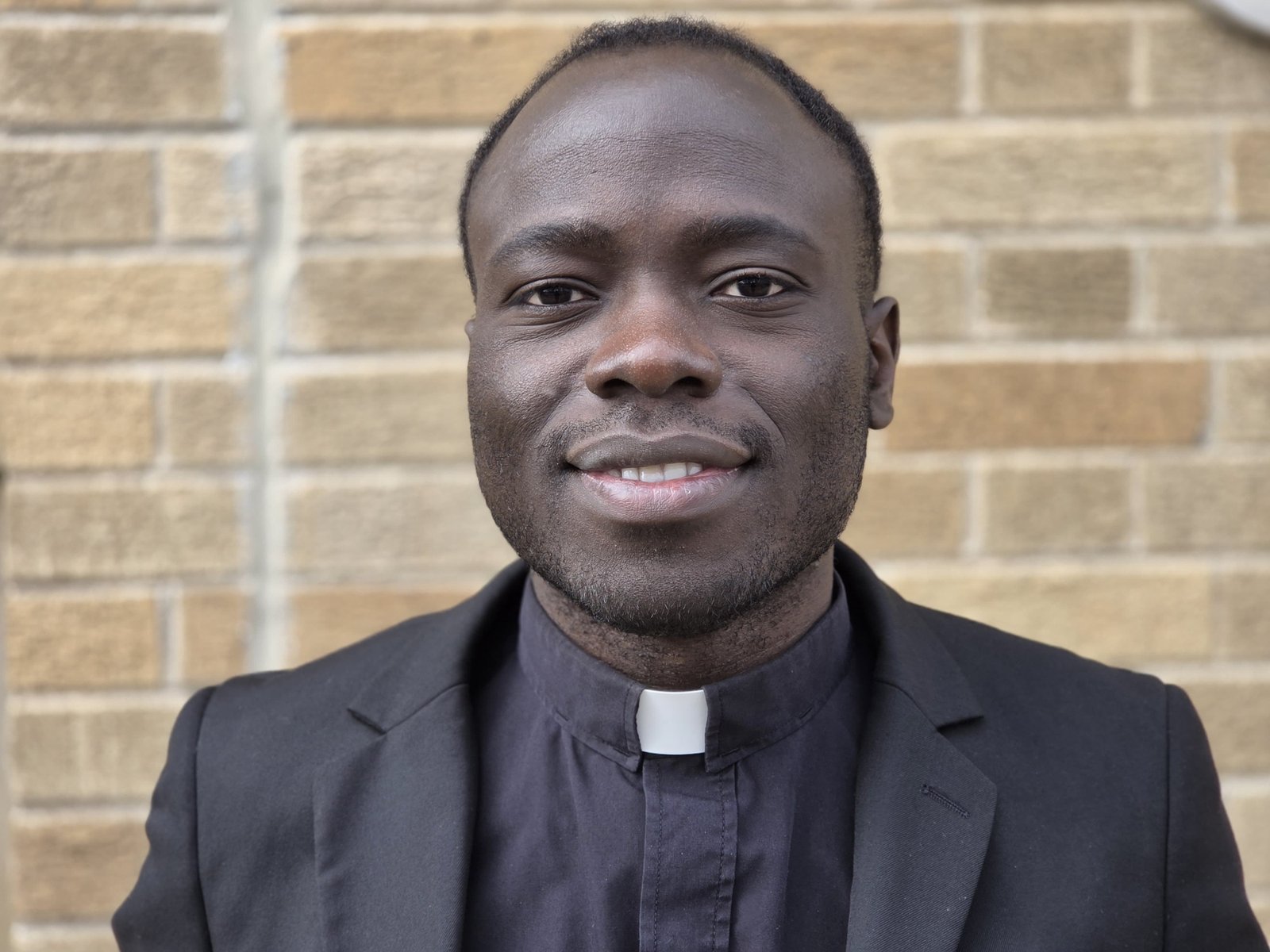
This comparison was written by Seminarian Giuseppe Njualem, Catholic seminarian and founder of HomilyWriterAI.
About Giuseppe Njualem
I'm a Catholic seminarian who experienced firsthand the time demands of homily preparation during parish practice in Canada. I built HomilyWriterAI to help priests spend less time hunting through sources and more time in prayer, pastoral care, and ministry. Learn more about my journey.